
Stock-car racing
~10% of selected impacts studied (2002–2008); ~25% career self-report
Our story
Capital Forge League has been assigned patents to help prevent CTE.
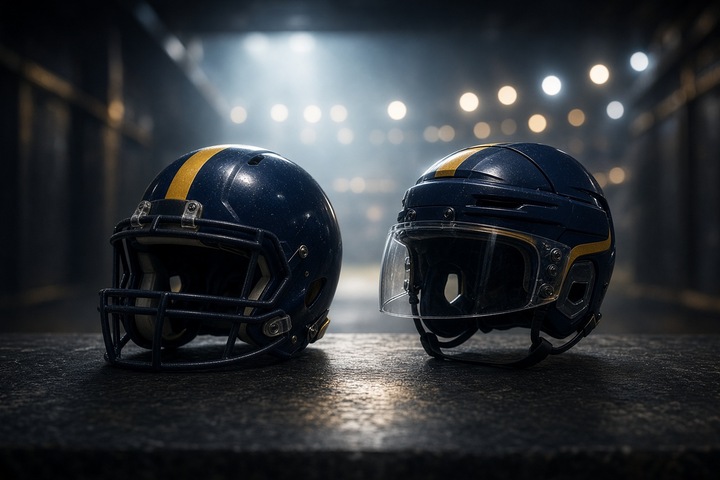
CFL’s core research. A way to ask whether this helmet, in this locker, is still sound — after the hits. Student teams join the work. They do not take the patent. Patent pending. CFL-owned.
Recreational and professional sport, military, and construction. Same unsolved gap. Pre-validation research, not a finished product. Not a clinic. Education product only.
A helmet's certification sticker carries an expiration date calculated from the day it was made — not from anything that has happened to it since. A helmet worn twice a week through four seasons of hits and a helmet that spent those years in a closet expire on the same day. Nobody checks the difference, because there is no way to. Two decades of engineering went into making helmets better at the moment of impact, and it worked. What no one built is the step after: a way to tell whether the helmet is still the helmet that was certified.
That gap is most true in youth sport, where equipment is shared, handed down, and bought secondhand — and the helmet's history is unknown to whoever wears it next.
Reported figures below are approximate, drawn from published literature across differing methodologies and eras, and are not directly comparable across domains — they illustrate scale, not a CFL claim.
~10% of selected impacts studied (2002–2008); ~25% career self-report
~6–25% across studies by era and definition; ~30% career self-report
~5–6 per 100 player-seasons (professional); youth leagues permitting body checking run higher
~7% single-season risk of one or more diagnosed concussions
~24% lifetime self-report among surveyed riders; 10–15% head-injury risk in crashes
~47 per 100,000 workers — the highest absolute count of work-related brain injuries of any U.S. industry
This is pre-validation technology. Capital Forge League is not claiming a demonstrated reduction in concussion rates and will not before testing supports it. The claim is narrower and checkable: the gap is real, nothing fills it today, and a credible engineering path exists.